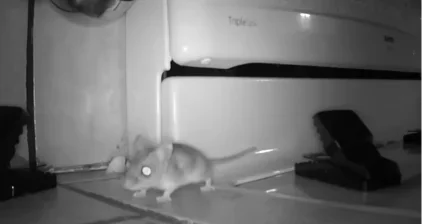
You set traps. You caught one or two. Then the droppings came back. That pattern is common, and it rarely means the traps were defective. It usually means the job was incomplete: the entry points stayed open, the placement missed the runs, or food and harborage kept drawing new animals in.
Short answer: Traps fail when entry points stay open, traps sit in the wrong places, too few traps are set, bait is wrong or stale, traps are not checked, or food and shelter keep attracting new rodents. Sealing plus monitoring is what makes trapping hold.
Why do traps catch one mouse and then nothing?
One catch often means the trap sat on a run the first animal used, and the remaining animals learned to avoid it or use a different run.
Mice and rats travel along walls, pipes, and baseboards, not across open floors. A trap in the middle of a room catches little. Traps belong along runs, near food sources, and at the edges of activity, with the trigger facing the wall. Rats are cautious around new objects, so a trap that has not been touched for days may need to be moved. The mice removal page and rat removal page describe placement as part of the inspection sequence.
How many traps do I need?
More than most people set. A small problem needs traps at every active run, not one trap in one room.
One trap cannot cover a kitchen, a pantry, a basement, and a wall void at once. Activity in more than one room means traps in more than one room. Traps also need checking on a schedule: a full trap catches nothing, and a dead animal left in a trap creates odor and flies. A professional plan states the trap count, the locations, and the checking schedule in writing.
Does bait matter?
Yes. Stale bait, the wrong bait, or bait that pets and children can reach all cause traps to fail.
Peanut butter, chocolate, and nut-based baits work for many mice, but bait must be fresh, firmly attached, and placed where the animal travels. Glue boards catch animals but raise handling and welfare questions, and they do not solve re-entry. Store-bought poison pellets carry their own risks, including dead animals in walls and secondary exposure to pets and wildlife. The poison, pets, and secondary-exposure guide covers those risks.
Why do mice keep coming back after I seal a hole?
Because one sealed hole is rarely the only hole. Mice use gaps of about a quarter inch, and an older home can have many.
Steel wool and foam in one visible gap help that gap, but mice find the next one: pipe penetrations, dryer vents, garage seals, door sweeps, attic gaps, and basement windows. A ground-to-roof inspection lists every gap with a photo. The exclusion page explains materials and method, including why foam alone in a large gap often fails.
When is DIY enough, and when should I call a professional?
DIY can be enough for a single mouse, one room, and one gap, with no recurrence after sealing. Call a professional when droppings appear in more than one room, noises come from more than one void, activity returns after sealing, or you see a mouse in daylight.
Daytime sightings, droppings across several rooms, burrow openings, attic nesting, or a smell in a wall all point to a population rather than a single animal. Renters should tell the landlord in writing before hiring anyone; the landlord and tenant guide covers who usually pays in Pennsylvania. Commercial buildings should not rely on DIY at all, because documentation and monitoring matter for inspections. See how it works before you decide.
What a professional plan lists in writing
Before work begins, ask for the plan in writing: which rooms and runs get traps, how many traps, the checking schedule, which gaps get sealed and with what materials, what cleanup is included, and what follow-up visits are included. A written plan also states what is excluded, so there is no surprise later. Compare that plan against the reasons traps failed before: open gaps, wrong placement, or food left out. If the plan does not address all three, ask why.
What to do next
Secure food in sealed containers, remove pet food and birdseed spillage, and note every room with signs. Then request a callback for a full gap list, a trapping plan, and a quote before work begins.
Sources: U.S. Environmental Protection Agency (EPA) guidance on identifying and preventing rodent infestations; CDC guidance on sealing, trapping, and cleaning up. General information only.