Mice in a rental raise two questions at once: who fixes it, and who pays. In Pennsylvania the answer starts with the lease, the condition of the home, and a legal principle called the implied warranty of habitability. This guide explains that principle in plain language. It is general information, not legal advice.
Short answer: In Pennsylvania, a landlord is generally responsible for eliminating a pre-existing infestation and correcting structural conditions that attract rodents, while a tenant may share responsibility if the tenant’s own conditions caused or contributed to the problem. Lease terms and local housing code matter. Talk to an attorney or legal aid office for advice on your situation.
What is the implied warranty of habitability in Pennsylvania?
Every residential lease in Pennsylvania contains an unwritten assurance that the home will be safe, sanitary, and healthy.
The principle comes from the Pennsylvania Supreme Court case Pugh v. Holmes (1979). Under it, serious defects, including rodent infestation, are generally covered unless caused by the tenant. That means a landlord cannot simply write the duty away in a lease, though the lease still matters for details like notice, access, and repairs. The warranty does not mean every mouse sighting is a landlord violation. It means a real infestation tied to the condition of the property is the landlord’s problem to fix, not the tenant’s to live with.
Who pays for mice extermination in a rental?
The landlord generally pays when the infestation is pre-existing or tied to structural conditions, such as gaps, broken screens, or building-wide entry points.
A tenant may share responsibility when the tenant’s own unsanitary habits caused or contributed to the problem, for example food left out, garbage piling up, or clutter that harbors rodents. In practice, the line depends on the facts: when the infestation started, what the inspection found, and what the lease says. A tenant who keeps a clean unit and reports droppings early is in a stronger position than a tenant who waited months. A landlord with a building-wide gap problem cannot shift the whole cost to one tenant. Property managers handling multi-unit buildings need building-wide work, not one-unit fixes. The commercial page covers multi-unit and property-manager service.
What should I tell my landlord, and how?
Tell the landlord in writing, with dates, photos, and a clear request for action.
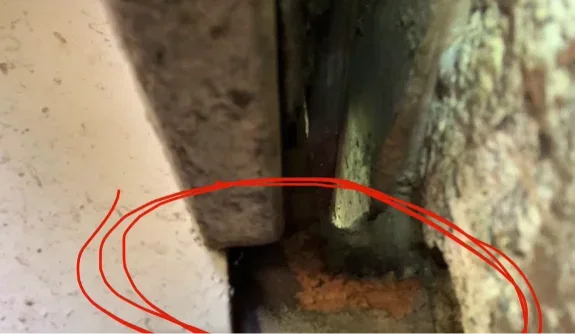
A written notice protects both sides. Include: when you first noticed signs, which rooms show droppings or noises, photos of droppings, gnaw marks, and entry points, and a request for inspection and treatment by a stated date. Keep a copy. Send it in a way you can prove, such as email or a letter with delivery confirmation. Follow up in writing if nothing happens. Verbal complaints are easy to forget and hard to prove. Do not hire an exterminator and deduct the cost from rent without legal advice; Pennsylvania has specific procedures for repair and rent remedies, and the wrong step can create an eviction risk.
What if my landlord will not act?
Document everything, send a second written notice, and consider code enforcement and legal advice.
If the landlord does not respond, send a second written notice referencing the first, with new photos and dates. In Scranton, residents can report a code violation or property complaint to Scranton Code Enforcement by email at scranton311@scrantonpa.gov or by phone at 570-348-4101. Keep copies of every notice, photo, and reply. Talk to a local attorney or legal aid office before withholding rent, breaking a lease, or paying for treatment yourself. Do not stop paying rent as leverage without legal advice. If a landlord retaliates after a complaint, document that too and seek legal advice promptly.
What should a landlord do when a tenant reports mice?
Inspect promptly, treat the building, seal entry points, and communicate the plan and schedule in writing.
A landlord’s most effective move is a fast, documented response: an inspection of the unit and common areas, trapping and sealing where needed, and a written note to the tenant with dates. Building-wide gaps, shared walls, and neighboring units matter in doubles and row homes; sealing one unit alone may not hold. The exclusion page explains the sealing-first sequence, and the basement and crawl-space page covers the foundation gaps common in older rental stock.
What to do next
Tenants: send the written notice described above, with photos and dates, and keep a copy. Landlords: arrange an inspection and put the plan in writing. Either side can book an inspection for photos and a quote before work begins.
Sources: Penn State Wilkes-Barre guidance on the implied warranty of habitability; City of Scranton Code Enforcement contact information. Legal information here is general information, not legal advice. Talk to an attorney or legal aid office about your situation.