Our process
Our Process: How Rodent Control Works in Scranton, PA
Every job follows the same sequence: inspect, plan, trap and remove, seal, clean safely, and monitor. This page explains what happens at each step, what happens on each visit, what to prepare, and what follow-up covers.
The sequence matters
We do not start with poison and we do not start with traps. We start with the inspection, because the inspection is what turns a vague problem — droppings in a drawer, scratching at night — into a written list of entry points, signs, and steps. That list becomes the quote, and no work starts without approval.
Sealing without trapping can leave animals inside to die in voids or chew new exits. Poison without removal and sealing can leave a dead animal in a wall and allow re-entry. The sequence is part of the written scope.
The 6 steps
- Step 1 — Inspect
We walk the exterior, basement, attic, and rooms with signs, identify the species, and photograph entry points, burrows, runways, and droppings. The inspection is a ground-to-roof review of foundation, pipes, vents, garage, attic, basement, and roofline, with photos of entry points and signs, written findings, and a quote before work begins.
- Step 2 — Plan & Quote
You get a written plan and a quote before work begins, including which traps go where and which gaps will be sealed. No work starts without approval.
- Step 3 — Trap & Remove
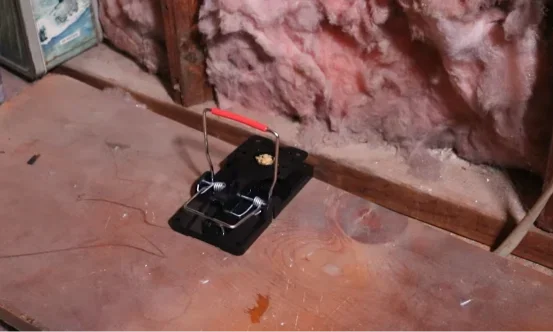
Traps are placed along active runways and near harborage, checked on scheduled follow-ups, and removed animals are handled with gloves and bagged for disposal. Traps are placed where activity is found, along runs and near food sources, checked and cleared on a stated schedule.
- Step 4 — Seal Entry Points
Once the animals inside are removed, gaps are sealed with durable materials such as metal flashing, hardware cloth, and sealant, matched to each opening. Gaps are closed with durable materials after animals are out, so trapped rodents are not replaced by new ones.
- Step 5 — Clean Safely
Droppings and contaminated material are handled with ventilation, wet disinfectant, gloves, and bagging. Never dry sweeping or vacuuming droppings.
- Step 6 — Monitor & Follow Up
Follow-up visits check trap activity, look for new signs, and confirm that sealed points are holding. Follow-up visits check for new activity and new gaps, and whether sealing held.
What happens on each visit
First visit — inspection. The first visit is for finding, not fixing. You receive a photo report and written findings: each entry point found, the signs behind it, and the recommended sequence. The quote follows the findings, so the price reflects your home rather than a flat menu.
Follow-up visits. Follow-up visits check trap activity, look for new signs, and confirm that sealed points are holding. Traps are checked and cleared on a stated schedule, and follow-up visits check for new activity, new gaps, and whether sealing held.
What to prepare
Before the first visit, it helps to have this ready:
- Describe what you are seeing — droppings, scratching at night, a mouse in the kitchen — and you will be told the next step and what an inspection covers.
- If you see a rat in the house, do not try to corner it. Keep food sealed, keep pets and children away from the room, and note where and when you saw it.
- Tell us at booking if the household has pets or small children.
- In a double, compare notes with the neighboring unit — scratching or droppings on both sides of a shared wall points to a building-wide entry problem.
- Send a message through the contact page with the signs, the rooms affected, and whether pets or children are in the home.
Follow-up
Follow-up visits check for new activity, new gaps, and whether sealing held. A provider should state the visit schedule, what is checked at each visit, and when to call back if signs return.
See what affects rodent control cost for the inspection fee policy and what a written quote should include.
Frequently asked questions
What does an inspection include?
A ground-to-roof review of the foundation, sill, pipes, vents, garage, doors, basement, attic, and roofline, with photos of entry points and signs, written findings, and a quote before work begins. The inspection fee policy is explained on the cost page.
Do you seal entry points, or only set traps?
Both. Trapping and removal come first, then sealing with durable materials, then cleanup and monitoring. Sealing is what keeps new rodents from replacing trapped ones.
What follow-up is included after treatment?
Follow-up visits check for new activity, new gaps, and whether sealing held. A provider should state the visit schedule, what is checked at each visit, and when to call back if signs return.