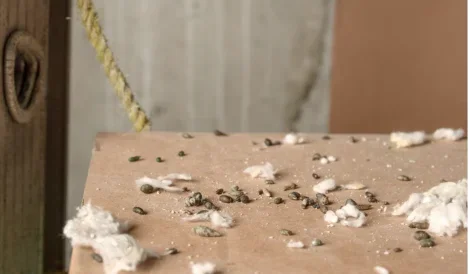
You found droppings in a drawer, behind the stove, or in the attic. The instinct is to sweep them up and vacuum the rest. That instinct is the risky one. Dry sweeping and vacuuming can stir up dust that carries pathogens, and the U.S. Centers for Disease Control and Prevention (CDC) advises against both for rodent droppings.
Short answer: Do not sweep or vacuum droppings dry. Ventilate the area, wear gloves, wet droppings and surfaces with disinfectant, wipe them up, bag the waste, and wash your hands. This is general information, not medical advice.
Why should I not sweep or vacuum mouse droppings?
Dry sweeping and vacuuming can aerosolize dust contaminated with urine and droppings, which can then be inhaled.
Rodent urine and droppings can carry pathogens, including hantavirus, salmonella, leptospirosis, and lymphocytic choriomeningitis virus (LCMV). The CDC states that rats and mice spread many diseases worldwide, directly and indirectly. Inhaling dust from dried droppings or urine is one exposure route, which is why wet methods matter. Vacuuming, including a shop vacuum, can blow fine particles into the air. Sweeping does the same. Wetting the area first keeps dust down.
What are the CDC steps for cleaning up droppings?
Ventilate, wear gloves, wet with disinfectant, wipe up, bag waste, disinfect surfaces, and wash hands.
The CDC steps, in plain language: open windows and ventilate the area for a while before you start. Wear rubber or plastic gloves, and a mask if you have one. Spray droppings, urine, nesting material, and nearby surfaces with a household disinfectant or a bleach solution, and let it soak. Wipe up with paper towels and place them in a plastic bag. Then mop or wipe the area again with disinfectant. Wash gloved hands, remove gloves, and wash bare hands with soap and water. Wash clothing worn during cleanup. If droppings are in a large area, in an attic, or near heating and cooling equipment, consider a professional cleanup instead. The attic cleanup page covers contaminated insulation and odor.
What should I wear for droppings cleanup?
Gloves, and a mask if you have one. Avoid touching droppings, urine, or nesting material with bare hands.
Rubber or plastic gloves are the minimum. A dust mask or respirator adds protection when droppings are in a dusty attic or basement. Wear clothing you can wash afterward. Keep pets and children out of the area during cleanup, and keep the area ventilated. If you have asthma, allergies, a weakened immune system, or you are pregnant, consider having someone else do the cleanup, and talk to your clinician about exposure. This is general information, not medical advice.
Can mouse droppings make you sick without touching them?
Yes, in principle. Dried urine and droppings can become airborne dust, and the protein in rodent urine is a potent allergen.
The EPA notes that the protein in urine from rats and mice is a potent allergen that can become airborne when it dries, triggering allergic reactions and asthma in sensitive people. Allergen can linger in a home after rodents are gone, which is one reason cleanup matters even after the animals are removed. If you develop fever, muscle aches, trouble breathing, or a worsening asthma flare after exposure, seek medical care promptly and mention the rodent exposure. This is general information, not medical advice.
When should I call a professional for cleanup?
Call a professional when droppings cover a large area, fill an attic or crawl space, sit near ductwork, or keep returning after cleanup.
Large attic contamination, insulation soaked with urine, nesting across beams, or a strong odor that does not lift after cleaning all point to professional cleanup. A professional visit also pairs cleanup with the reason it is needed: inspection, trapping, and sealing, so the same area does not get recontaminated. The basement and crawl-space page covers foundation-area cleanup, and the exclusion page covers sealing after cleanup.
What about droppings in stored items?
Droppings on stored food, cardboard, or fabric mean those items need attention too. Throw out food in torn or gnawed packaging. Wash hard containers with disinfectant before returning them to shelves. Bag and discard heavily soiled cardboard and fabric rather than trying to clean it, and wash your hands after handling it.
What to do next
Ventilate the area, gather gloves, disinfectant, paper towels, and bags, and follow the wet-cleanup steps above. Then book an inspection so the entry points behind the droppings get found and sealed.
Sources: CDC guidance on preventing hantavirus pulmonary syndrome and on cleaning up after rodents; EPA guidance on rodent allergens and on identifying and preventing rodent infestations. Health information here is general information, not medical advice. Talk to a clinician about exposure or symptoms.