A smell that starts faint, then fills a room, then brings flies. That is the usual sign of a dead animal in a wall void, attic, or basement. The first question is who handles it, and the answer depends on where the animal is and what kind of animal it is.
Short answer: On private property, the property owner handles it, usually through a private operator. On a street or public land, the city or the road authority handles it. Dogs and cats go to Lackawanna County Animal Control at 570-348-4180 x7, which handles domestic animals only, not wildlife or rodents.
How do you find a dead animal in a wall?
By narrowing the smell to one area, checking voids, attics, basements, and crawl spaces, and opening the smallest area needed.
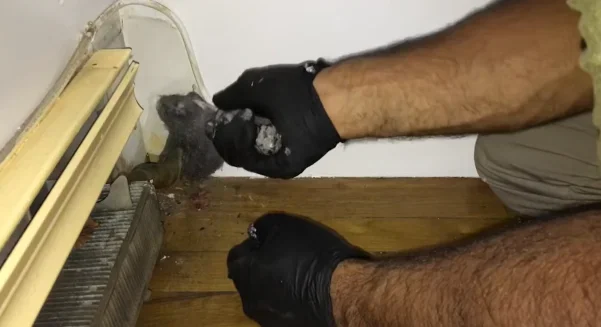
The smell is strongest near the carcass. Flies, staining, and warmth patterns help narrow the spot. A professional checks accessible voids first: attic, basement, crawl space, and wall cavities near pipes and vents. If the animal cannot be reached, a small opening is cut in the wall at the strongest point, the animal is removed with gloves, and the area is cleaned and disinfected. The opening is then repaired. Opening a wall without checking the voids first is a last resort, not a first step. The attic cleanup page covers droppings and odor after removal.
Who removes a dead animal on private property?
The property owner, usually by hiring a private operator.
A dead mouse, rat, or squirrel inside a home, garage, or shed is the owner’s responsibility. A rodent control or wildlife operator can remove it, clean and disinfect the area, and check for the entry points and traps that explain why the animal was there. If the animal died after poison, the operator should also check for other poisoned animals and discuss the bait plan. The rat removal page and mice removal page describe the trapping and sealing sequence that prevents repeat deaths in walls.
Who picks up a dead animal on the street or in a yard?
A dead animal on a public street or public land is handled by the city or the road authority. A dead animal in a private yard is the owner’s responsibility.
No published Scranton city street-pickup policy for dead animals was found in the research for this site, so the exact city reporting route should be confirmed with the city before relying on it. For interstates, the Pennsylvania Department of Transportation (PennDOT) handles I-81, I-84, and I-476. For a dead animal in your own yard, a private operator or the owner handles removal. Do not move a dead animal with bare hands. Wear gloves, bag it, and wash your hands afterward.
Who do I call for a dead or stray dog or cat?
Lackawanna County Animal Control at 570-348-4180 x7. That office handles domestic animals, dogs and cats only, not wildlife or rodents.
Residents often call the wrong number for animal problems. The county animal control office handles dogs and cats. It does not handle wildlife, mice, rats, squirrels, or dead rodents. Those go to a private operator. If you are unsure which category an animal falls into, describe the animal when you call, and the office will tell you whether it is theirs.
How do I stop animals from dying in my walls?
Seal entry points after removal, keep traps checked, and avoid poison that lets animals die out of reach.
Animals die in walls when they are sealed inside, when poison lets them wander into voids before dying, or when traps go unchecked. The sequence that prevents it is inspection, trapping and removal, sealing after animals are out, and monitoring. If you use bait, ask for the plan in writing, including where stations sit and how often they are checked. The poison guide explains secondary-exposure risks.
What if you cannot find the carcass?
Sometimes the smell fades before the animal is found, especially in a deep wall void. Ventilate the area, keep pets and children away, and note the dates and the rooms affected. If the smell persists, returns with warmth, or brings flies, an inspection can recheck the voids and decide whether opening a small area is warranted.
What to do next
Note where the smell is strongest, when it started, and whether flies or staining are present. Ventilate the area and keep pets and children away from it. Then book an inspection for locating, removal, and sealing.
Sources: Scranton-area wildlife and dead-animal guidance; Lackawanna County Animal Control routing as published on Scranton wildlife pages. City street-pickup policy could not be verified; confirm the reporting route with the city. General information only.